Unlocking Creativity with Watercolor Floral Wreaths Clipart
The digital marketplace is full of assets promising to streamline creative work, but few deliver the blend of quality and flexibility needed for professional output. The Watercolor Floral Wreaths Clipart - 3 PNG set represents a specific category of design resource: high-resolution, versatile foundational art. This isn't merely a decorative element; it's a core component that fits into a broader design process, acting as a starting point for countless projects. For professionals, entrepreneurs, and hobbyists, integrating such assets requires understanding where they fit, how they interact with other tools, and the practical steps for maximizing their value.
Understanding the Asset and Its Role in Your Workflow
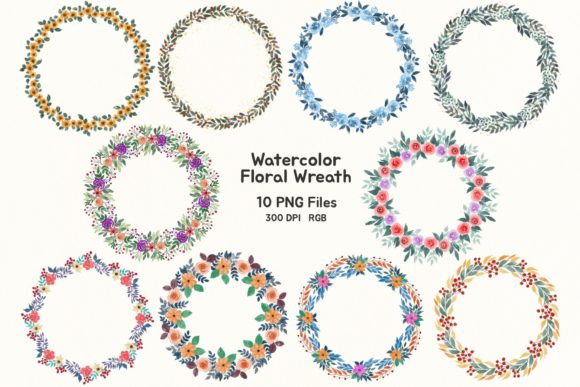
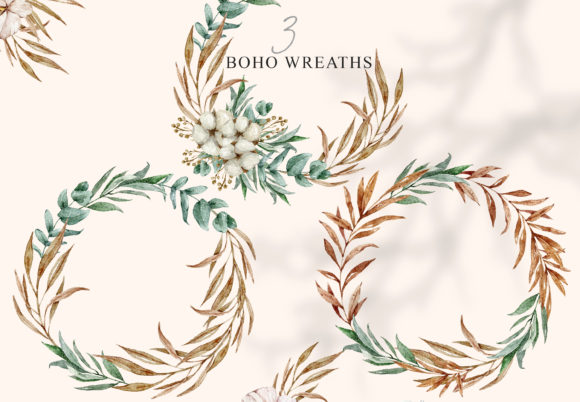
At its core, this clipart set is a collection of three distinct, hand-painted watercolor wreaths provided as PNG files. The specifications—4000 x 4000 pixels, 300 DPI, transparent backgrounds—are not arbitrary. They define its utility. This resolution ensures the art remains crisp when scaled down for a greeting card or scaled up for a large poster, eliminating the common workflow bottleneck of sourcing assets that degrade under manipulation. The transparent background is a critical feature for integration; it allows you to place the wreath over any color, texture, or photograph in your composition without the tedious manual masking that consumes valuable project time.
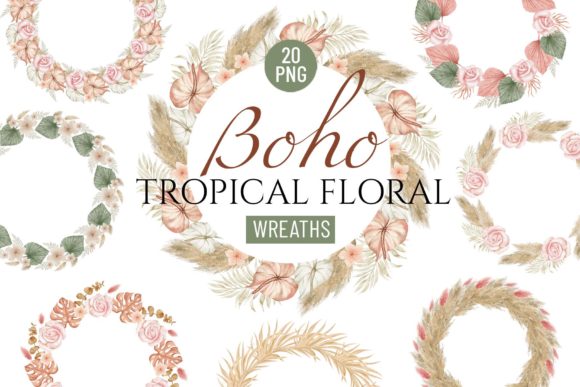
This set fits into the early stages of a creative workflow, typically during the asset gathering and concept development phase. Before you begin arranging text on an invitation or sketching a logo layout, you secure foundational visual elements. These wreaths serve that purpose. They provide an established aesthetic—a boho tropical watercolor style—that sets the visual tone for your entire project. By having this consistent, high-quality art from the start, you ensure design coherence, which directly impacts efficiency and final quality.
Integration with Tools and Platforms
The practical value of any digital asset is dictated by its compatibility. The note that these PNG files are compatible with most graphic programs is a key workflow consideration. Whether you use Adobe Photoshop, Illustrator, Canva, Affinity Designer, or even presentation software like PowerPoint, the asset integrates seamlessly. This interoperability means you don't need to alter your preferred toolset or learn new software; you can incorporate the wreaths directly into your established environment.
Consider a common interaction: you are designing a wedding invitation in Photoshop. You have your text layers and a background texture. Adding one of these wreaths involves simply placing the PNG file as a new layer. Because of the transparency, it sits cleanly above or below other elements. You can then use Photoshop's tools to adjust hue, add drop shadows, or blend modes to integrate it uniquely into your composition. Similarly, in a platform like Canva, you upload the PNG and use it as a static element or combine it with Canva’s native filters and text options. The asset doesn't lock you into a single method; it enhances the capabilities of your existing toolkit.
Practical Implementation Across Diverse Use Cases
The listed applications—wedding invitations, greeting cards, posters, logos, and branding—are starting points, not limits. A process-oriented approach examines how the asset functions within each.
For wedding invitations, the workflow often begins with selecting a theme. The boho tropical watercolor style of these wreaths immediately answers that question. You might use one wreath as a central frame for the text, another as a corner accent on a digital save-the-date, and the third as a repeating pattern on the envelope liner. This use of multiple assets from the same set guarantees visual consistency across all wedding stationery, a crucial aspect of quality control for such projects.
In branding and logo creation for a small business, perhaps a floral shop or a wellness coach, the wreath can become a foundational logo mark. The process here involves more iteration. You might start by placing the wreath in a design document and experimenting with typography placement around or within it. Because the file is high-resolution, you can zoom in to select specific floral elements from the wreath to create secondary icons for social media or packaging. This asset facilitates a cohesive brand identity system from a single source, improving organization and long-term usability.
For educators and bloggers creating posters or digital graphics, the asset speeds up production. Instead of spending hours illustrating or searching for disparate elements, you begin with a complete, artistic focal point. Your workflow shifts from asset creation to content arrangement, allowing you to focus on message and layout. This efficiency is particularly valuable for recurring projects, like weekly blog graphics or course materials, where maintaining a certain aesthetic standard is important.
Workflow Tips for Effective and Long-Term Use
To integrate this clipart set smoothly into your routine, consider these practical steps focused on preparation and organization.
- Asset Cataloging: Upon purchase, immediately save the files to a dedicated “Design Assets” folder within your project directory system. Label them clearly, perhaps by style or primary color. This simple step prevents the common frustration of “lost files” during crucial project moments.
- Template Creation: For recurring needs, such as monthly greeting cards, create a template file in your design software with the wreath already placed. Lock its layer and build your text and other variable elements above it. This turns a single asset into a reusable template, dramatically increasing workflow efficiency over time.
- Color Adaptation: While the watercolor style is fixed, you can use software tools to subtly adjust color balances to match different project palettes. Doing this non-destructively—using adjustment layers in Photoshop or similar—preserves the original file for other uses, giving you flexibility without compromising the asset's integrity.
- Combination with Other Resources: Remember, fonts, mockups, and photos are not included. Your workflow must include sourcing these complementary elements. The wreaths act as the unifying artistic layer. When selecting fonts, choose ones that complement the hand-painted, organic feel—perhaps soft script or clean sans-serif types. For mockups, seek out those that showcase stationery or branding in a way that lets your wreath-centric design shine.
Focus on Outcomes: Consistency, Quality, and Speed
The ultimate reason to incorporate such a defined asset into your process is the improvement in project outcomes. Consistency is achieved because the same artistic hand is present across all materials. Quality is elevated by the high-resolution detail and professional transparency, which amateur alternatives often lack. Speed is gained because you bypass the initial design hurdle of creating or finding a central visual motif.
This doesn't mean the asset does the work for you. It means it handles a specific, time-intensive part of the work, allowing you to allocate your effort to composition, messaging, and fine-tuning. For the entrepreneur designing their own brand materials, this is invaluable. For the freelancer juggling multiple client projects, it provides a reliable, reusable resource that maintains output standards. Even for the hobbyist, it offers a gateway to professional-looking results without requiring advanced illustration skills.
In practice, after several projects using the same Watercolor Floral Wreaths Clipart set, you'll develop a familiarity with its elements. You might know that one wreath works best for circular logos, while another has a gap perfect for vertical text insertion. This familiarity turns an external asset into an integral part of your personal design toolkit, reducing preparation time and increasing creative confidence for every new project that calls for a touch of elegant, botanical artistry.