The Artful Utility of Boho Watercolor Flowers in Digital Design
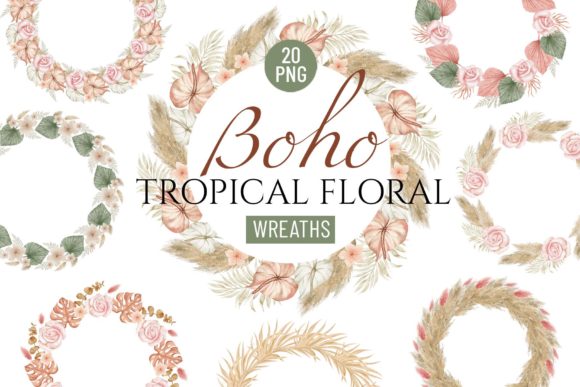
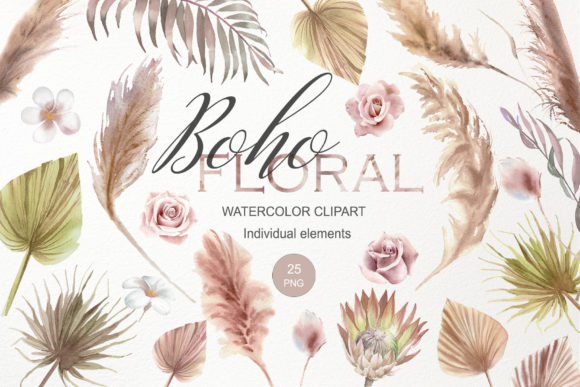
In the realm of digital creation, the availability of high-quality assets fundamentally shapes the possibilities for designers, crafters, and entrepreneurs. Among these resources, collections of Boho Floral Clipart, particularly those rendered in a hand-painted watercolor style, have emerged as a uniquely versatile toolkit. These digital illustrations, characterized by their soft blends, organic textures, and romantic aesthetic, transcend simple decoration to become foundational elements in a wide spectrum of projects. When such a collection includes components like dry palm leaves, pampas grass, and rose flowers, all saved as high-resolution transparent PNGs, it essentially provides a curated palette of natural artistry ready for immediate application.
Decoding the Characteristics of Premium Botanical Clipart
The technical specifications of a digital asset collection are not mere details; they are the parameters of its potential. A set offering files at 300 DPI in RGB color, with sizes such as 10 inches (3000 pixels) and 6 inches (2000 pixels), is engineered for both print and digital fidelity. The 300 DPI resolution ensures that when these watercolor flowers are printed for wedding invitations or home decor, the output retains the delicate nuance of every brushstroke, with no pixelation or loss of detail. The RGB color mode is optimal for screens and most modern digital printers, maintaining the vibrant yet soft hues typical of watercolor work. The provision of two size variants offers flexibility: the larger file is ideal for prominent features on a poster or textile, while the smaller is perfectly efficient for multiple elements on a greeting card or digital layout.
The Practical Power of Transparency and Isolation
Perhaps the most critical feature is the transparent PNG format. Each element—a single rose, a cluster of pampas grass, an elegant palm leaf—exists independently against a transparent background. This means the user is not receiving a static scene, but a library of individual, combinable parts. A designer can layer a watercolor rose over a textured background, place palm leaves alongside typed text on a baby shower invitation, or scatter floral elements around a logo without the laborious process of manual cutting or extraction. This isolation empowers non-destructive, creative composition. The 25 individual elements in such a set are not just 25 images; they are hundreds of potential arrangements, waiting to be assembled according to the user’s specific vision.
Real-World Applications: From Personal Projects to Professional Products
The application of these Boho floral clipart resources is as diverse as the community that uses them. The mention of wedding invitations, bridal showers, and baby showers points directly to the event industry, where a cohesive, beautiful aesthetic is paramount. A stationery designer can use these consistent, high-quality elements to create a full suite of materials—invitations, programs, menus, thank-you cards—all sharing the same hand-painted botanical theme. This ensures brand consistency for the event while saving the designer immense time compared to illustrating each piece from scratch.
Beyond events, the realm of printable home decor has exploded. Individuals can download these files, print them on premium paper or canvas, and create custom wall art, calendar inserts, or framed quotations adorned with these watercolor flowers. The instructions noting they can be printed on clothes, bedding, mugs, and textile bags open the door to DIY product creation. A small business owner specializing in handmade goods could use these designs to create a line of branded tote bags or ceramic mugs, leveraging the professional quality of the clipart to elevate their offerings. Similarly, in digital scrapbooking, these elements become the floral embellishments and borders that personalize a digital memory album.
Integration into Commercial and Educational Workflows
For professionals in packaging and greeting card design, such a collection acts as a cost-effective asset library. Instead of commissioning custom watercolor illustrations for every new product line, which can be time-consuming and expensive, they can integrate these ready-made, yet realistic, botanical elements into their layouts. This allows for rapid prototyping and iteration on designs. Educators and content creators might use these transparent PNGs in creating teaching materials, website graphics, or social media content where a soft, natural visual theme is desired. The key advantage across all these use cases is the separation of the artistic creation from the implementation. The user focuses on composition, layout, and purpose, while the clipart provides the perfected artistic component.
Considerations for Selection and Effective Use
While the benefits are clear, effective utilization hinges on a few considerations. First is the matter of licensing and intended use. Most such collections are offered for personal and commercial use, but it is always prudent to verify the specific terms. Second, the technical aspect of file management: files distributed in ZIP format need to be extracted, and users should organize the 25 elements in a way that makes them easily findable for future projects. The high resolution also means file sizes are substantial, which is a benefit for quality but requires adequate storage space and processing power from design software.
A third consideration is stylistic coherence. A collection boasting hand-painted realistic botanical watercolor illustrations implies a certain level of artistic consistency. However, the user must still assess whether the style of the dry palm leaves matches the style of the rose flowers within the set to ensure they blend seamlessly when combined. This realistic watercolor approach, with its subtle gradients and textured edges, often integrates more naturally with other soft designs or blank spaces than with harsh, geometric graphics.
The Evolution of Digital Assets in Creative Economies
The availability of such specialized collections reflects a larger trend in digital creativity: the democratization of design tools. High-end visual elements, once accessible only to those with illustration skills or large budgets, are now available to hobbyists, small business owners, and professionals alike. This particular niche of Boho Floral Clipart, Watercolor Flowers, answers a specific market demand for aesthetics that are organic, romantic, and earthy. The boho style, with its emphasis on nature, freedom, and eclectic beauty, finds a perfect digital expression in these watercolor files. They capture the imperfection and warmth of real watercolor painting, translating it into a reusable, scalable digital format.
Ultimately, a collection like this is more than a product; it is a conduit for creativity. The statement "Happy creating" is not just a polite closing; it encapsulates the core outcome. By providing these building blocks—the isolated rose, the spray of pampas grass, the elegant palm leaf—in a technically robust format, the collection removes technical barriers and empowers the user’s own ideas. Whether the final project is a heartfelt wedding invitation, a set of sellable greeting cards, a personalized baby shower decoration, or a textile bag for a local market, the journey begins with these transparent, high-resolution files. The watercolor flowers serve not as the end product, but as the artful medium through which countless personal and professional visions are realized and shared.